


What is the best DDQ software for due diligence questionnaires?
There is no single best DDQ software. Which tool fits depends on the due diligence questionnaires you field and how often. A practical buyer's guide.

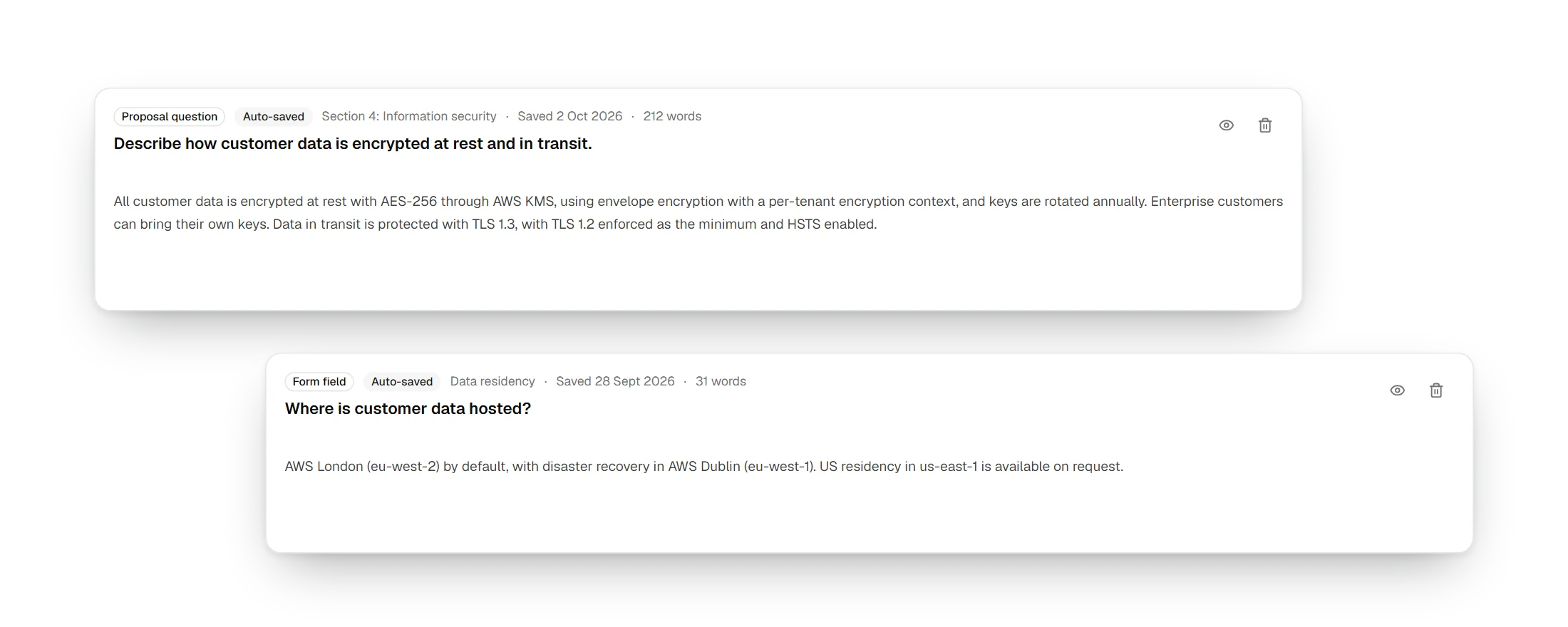
There is no single best DDQ software, because the right choice depends on which due diligence questionnaires you actually field and how often they land. A firm that answers two investor DDQs a year needs something very different from one that returns a security due diligence questionnaire most weeks. The market also splits into two families that solve different problems, and mixing them up is where a lot of buyers waste a trial. This guide sets out the DDQ types, the two families of tools, and the checks that separate a good fit from an expensive mistake.
Why the best DDQ software depends on your mix
The phrase due diligence questionnaire covers several document types, and they do not all stress the same part of a tool. Some teams face a heavy but predictable annual cycle. Others deal with unpredictable, high volume inbound where turnaround time and consistency matter more than anything else. Before you compare products, it helps to be honest about your own pattern, because that pattern decides which features you will lean on and which you will never touch.
Two questions usually settle the shortlist. First, which DDQ types do you receive, and in what proportion. Second, how often, and under what deadline pressure. A tool that looks impressive in a polished demo can still be the wrong shape for your volume, your reviewers, and the way your subject matter experts prefer to work. Start from your workload, not from a feature list.
The main types of DDQ, and why they differ
Third party or vendor risk DDQs come from your customers and their procurement or risk teams. These often overlap with security questionnaires such as SIG, CAIQ and VSAQ, and they tend to arrive in bulk and on short deadlines. Security due diligence questionnaires focus specifically on how you protect data and run your controls, and reviewers increasingly expect answers backed by evidence rather than assertions.
Fund and investor DDQs sit in a different world. They go to asset managers and funds, often follow industry templates, and carry weight because an allocation can depend on them. ESG and sustainability questionnaires are a growing category of their own, blending policy, data and disclosure requirements that change year to year.
The important point is that these types share a lot of underlying content. Your security posture, your policies, your company facts and your track record show up across most of them. That shared core is exactly why the reuse question below matters so much when you compare tools.
Two families of tools, and what each is for
The first family is compliance, trust centre and vendor risk platforms. These are built to manage evidence, controls and workflow: storing policies and certifications, tracking who is accountable, and in some cases publishing a trust page so buyers can self serve. You will see names such as Vanta and DiligenceVault discussed in this space, and Ontra is generally associated with legal and workflow automation in private markets. Their strength is governing and surfacing evidence rather than composing long form answers.
The second family is answer drafting tools. Their job is to write the questionnaire responses themselves, usually by drawing on a library of previous answers and approved content. Names commonly discussed here include Loopio, Responsive, Arphie, SiftHub and AutoRFP.ai, and many originate from the RFP and security questionnaire world. Their strength is turning a blank questionnaire into a reviewable draft quickly.
Plenty of tools now stretch across both families, so treat these as directions of emphasis rather than rigid boxes. The useful move is to decide which problem is actually your bottleneck. If evidence is scattered and ownership is unclear, look at the first family. If drafting and re-drafting eats your week, look at the second.
The real test: sourced answers and one reusable library
The single most important check for any answer drafting tool is whether the output stays traceable to your own approved evidence. Generative tools can produce fluent text that reads well and is quietly wrong, and on a security or investor DDQ a confident but unsupported answer is a liability. Ask to see, for any given answer, exactly which source document it came from, so a reviewer can verify it in seconds instead of trusting unsourced text. If a tool cannot show its working, you are buying speed at the cost of assurance.
The second test is reuse. Because DDQ types share so much content, you want one approved library that serves vendor risk, security, investor and ESG questionnaires alike, rather than a separate silo per format. A single well maintained source of truth keeps answers consistent, reduces the review burden, and means an update to a policy or a fact propagates everywhere instead of being fixed in one document and missed in five others.
These two properties, traceable answers and a shared library, tend to predict long term value better than any headline feature. A tool can have an elegant interface and still fail both, so put them at the top of your evaluation, not the bottom.
| Typical tools | Airprose | |
|---|---|---|
| Answer traceable to a source | Varies | Every answer |
| Reuse across DDQ types | Often siloed | One library |
| Data location | Often US | UK, isolated |
| Trains shared models | Sometimes | Never |
| Pricing | Per seat or quote | Flat, unlimited users |
How to shortlist and trial, and where Airprose fits
Draw up a shortlist of three or four tools that match your dominant DDQ type and volume, then trial each on a real questionnaire you have already completed. Score them on time to a usable draft, on whether every answer is traceable to a source, on how much reviewer editing was needed, and on how one library serves your different DDQ types. Also weigh the commercial and governance basics: data residency, whether your content is used to train shared models, per customer isolation, and how pricing scales as more colleagues need access. On certifications, ask directly whether a vendor holds SOC 2 or ISO 27001, and take an honest not yet as more useful than a vague reassurance.
Airprose belongs to the answer drafting family. It drafts responses to RFPs, security questionnaires and DDQs from your company's own approved content, and every answer is traceable to its source document so a reviewer can verify it quickly rather than trusting unsourced text. Data is stored in the UK with per tenant isolation, and your content is not used to train shared models. In the interest of being plain, Airprose does not yet hold SOC 2 or ISO 27001.
On commercials, Airprose uses flat, published pricing with unlimited users rather than per seat licensing, and it is free to start with no card and no scheduled demo, so you can test it against a real DDQ before committing. Treat it as one option worth shortlisting alongside the tools above, and let your own trial results decide.
Common questions
Straight answers.
No. The right tool depends on which DDQ types you field, such as vendor risk, security, investor or ESG, and how often they arrive. Match a shortlist to your own volume and mix, then trial each on a real questionnaire before deciding.
Vendor risk and trust centre platforms manage evidence, controls and workflow, and sometimes publish a trust page. Answer drafting tools write the questionnaire responses themselves from a library of approved content. Some products now do a bit of both, so decide which is your actual bottleneck.
Generative tools can produce fluent text that is quietly wrong, which is a real risk on security and investor DDQs. If every answer links back to its source document, a reviewer can verify it in seconds rather than trusting unsourced text. Treat that as a top evaluation criterion.
Not yet. Airprose does not currently hold SOC 2 or ISO 27001. It stores data in the UK with per tenant isolation and does not use your content to train shared models, and it is worth asking every vendor the same certification question directly.

Your next RFP, already drafted.
Point Airprose at your content and watch it write the first version. Start free, no card needed.